
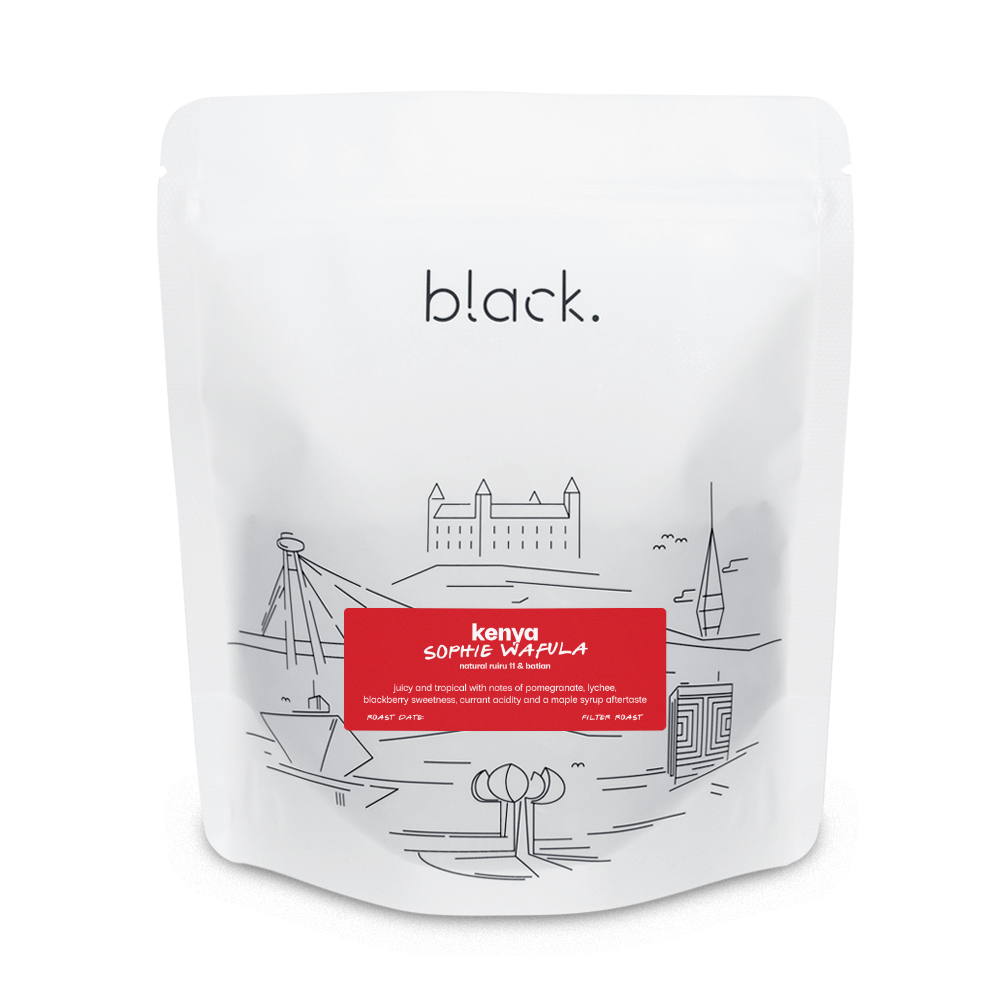
juicy and tropical with notes of pomegranate, lychee, blackberry sweetness, currant acidity and a maple syrup aftertaste
This coffee has a rather unusual story behind it. David Wafula spent 30 years working for the Kenyan Parliament before later serving as a Member of Parliament for Saboti Constituency. Throughout his life, however, he remained closely connected to agriculture, which had always been part of the Wafula family. When David bought a 100-acre farm, he initially used it to grow sugar cane and maize. The idea to plant coffee came from his daughter Sophie, who became interested in coffee while studying hospitality and later worked as a barista. What started with just 10 acres of coffee has gradually grown into more than 30, and coffee has now become an important part of the family farm.
The farm is located at around 1,500 metres above sea level and primarily grows Ruiru 11 and Batian. During the harvest season, around 150 people are employed, with women and young people making up approximately 85% of the workforce. Providing employment opportunities for the local community is an important part of the farm’s approach, with the income helping families cover expenses such as their children’s education. Coffee is also intercropped with macadamia, avocado and sugar cane, while cow manure is mixed with coffee pulp to produce organic fertiliser.
This lot was processed naturally. Ripe coffee cherries are carefully sorted according to density and then fermented for 72 hours before being dried until they reach the desired moisture level. The result is a sweet and expressive Kenyan coffee that combines the fruitiness of natural processing with the characteristic structure and complexity of Ruiru 11 and Batian.

| variety | ruiru 11 & batian |
| process | natural |
| region | nairobi |
| altitude | 1500 masl. |

